
Contact Info
Plague Facts
On this page:
What is plague?
How do you get plague?
Can you get it from other people?
Why is it considered a possible terror weapon?
Can plague be prevented?
Can it be treated?
What should I do if I think I may have been exposed to plague?
- Download PDF version formatted for print: Plague - English (PDF)
What is plague?
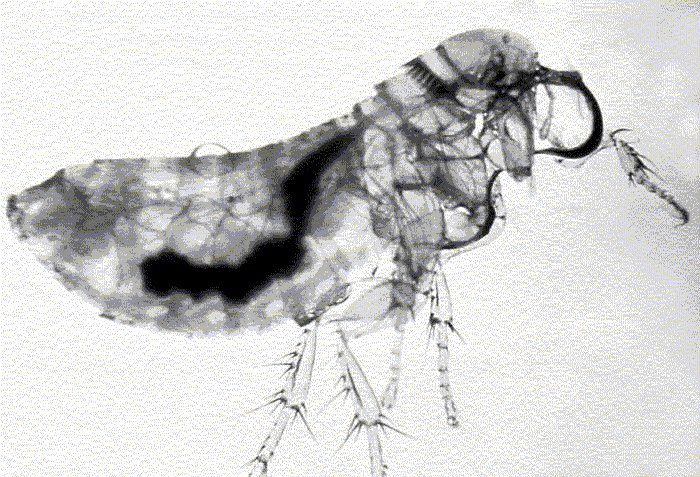
Plague is a disease caused by a kind of bacteria. In nature, the disease is spread from rodents to humans by the bite of a flea. During the fourteenth century, this illness spread across the world in three large waves, killing one-third to one-half of the population in places where outbreaks occurred.
Thanks to improved sanitation and living conditions, outbreaks of plague are now rare. However, up to 2,000 cases are reported each year worldwide, including about 15 cases in the southwestern U.S.
There are three kinds of plague:
- Bubonic plague is the most common form of the disease in nature, accounting for 75-97 percent of cases. The symptoms, which come on quickly, include fever, chills, weakness, and painful, swollen lymph nodes, or “buboes.”
- Septicemic plague – a blood infection caused by plague bacteria – is less common. It accounts for fewer than 20 percent of “natural” plague cases.
- Pneumonic plague is the most severe form of the illness – but the least common in nature. It accounts for fewer than 14 percent of cases. However, this is believed to be the form of plague most likely to result from a terrorist attack. It occurs when the bacteria enter the lungs, which quickly causes a severe form of pneumonia.
Symptoms of pneumonic plague include high fever, chest pain, cough, shortness of breath and coughing up bloody fluid or mucus. Unless antibiotic treatment is started within 24 hours, the patient can quickly go into shock and die. For patients who do not receive immediate treatment, the death rate is nearly 100 percent.
Symptoms of pneumonic plague typically appear within one or two days after exposure to the bacteria.
How do you get plague?
People get bubonic plague from infected animals. The bacteria are spread by bites from infected fleas, bites or scratches from infected animals, or direct contact with infected animal carcasses.
People get pneumonic plague by inhaling droplets that contain plague bacteria. The droplets are released into the air when infected people – or animals – cough. However, if plague were to be used as a weapon, the bacteria could be released into the air on purpose.
Can you get it from other people?
Yes – by inhaling droplets released into the air when infected people cough.
Why is it considered a possible terror weapon?
The possible use of plague as a weapon has been studied for at least 60 years. The Japanese reportedly tried to use bomblets to spread infected fleas during World War II. Both the U.S. and the former Soviet Union developed methods for releasing plague bacteria into the air during the 1950s and 1960s.
Plague is considered to be a possible biological weapon because:
- The bacteria can be released into the air, potentially infecting large numbers of people.
- Bacteria released into the air will cause the dangerous pneumonic form of plague.
- Pneumonic plague can be passed from one person to another, further spreading the illness.
- Pneumonic plague is a serious illness with a high death rate.
- An outbreak of pneumonic plague would cause extreme fear and panic.
The first sign of a pneumonic plague attack would be a wave of people seeking medical treatment for severe respiratory problems, about one to two days after the attack. By that time, the bacteria would no longer be present in the air. Without quick, aggressive treatment, many of the people exposed to the bacteria will die.
Can plague be prevented?
No vaccine is now available for plague, although efforts are underway to develop one. When people are exposed to infected people or animals, antibiotics can be used to prevent the illness – if the treatment is started right away.
Plague bacteria released into the air will survive less than one hour. They are destroyed by sunlight, heat and drying. You may also be able to reduce your risk of illness if you remove your clothing and take a shower, within the first hour after being exposed. However, you would still need to take antibiotics as a preventive measure.
Can it be treated?
All forms of plague can be treated with antibiotics. However, people with pneumonic plague must be treated within 24 hours after they develop symptoms. If they aren’t, pneumonic plague is nearly always fatal.
What should I do if I think I may have been exposed to plague?
If you’d been exposed to plague, it isn’t likely that you would know it. However, if you have any reason to believe that you may have been exposed, talk to your doctor immediately. If you see any suspicious situations or activity in your community – including possible use of disease germs as weapons – alert your local law enforcement agency.