
Transforming Minnesota's Public Health System
- Home: System Transformation
- About This Work
- Framework of Foundational Responsibilities
- Definitions, Criteria, and Standards for Fulfillment
- Joint Leadership Team
- Minn. Infrastructure Fund and Local Innovation Projects
- Governance Groups and Communities of Practice
- Data Modernization
- Regional Data Models
- Tribal Public Health Capacity and Infrastructure
- FPHR Grant: Funding for Foundational Responsibilities
- Reports, Fact Sheets, Resources
- News & Blog: Public Health System Transformation Update
- Message Toolkit
Related Sites
Contact Info
What Do Foundational Responsibilities Look Like in Practice?
Public Health System Transformation Update Newsletter
April 2024 | View all system transformation newsletters
Public health partners across Minnesota, at the state, local, tribal, and community level, are working together to answer: What would it look like for Minnesota to fulfill the foundational public health responsibilities?
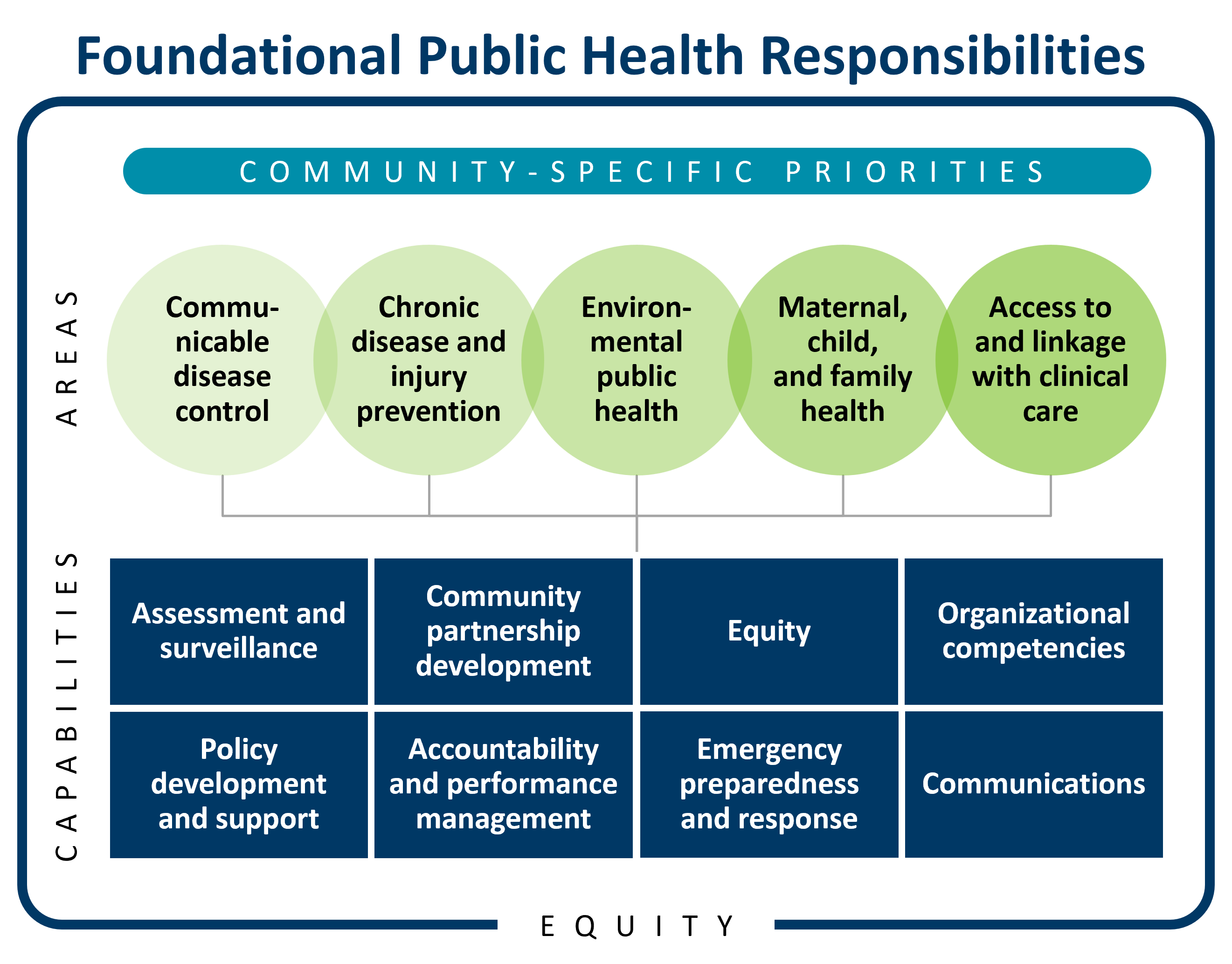
Here are some of the ways we’re finding answers, together:
Meeting in a community of practice
Local public health leaders and staff have started to meet each month in a Foundational Public Health Responsibilities Community of Practice, to learn about, discuss, and resolve questions related to foundational areas, capabilities, and how they all fit together in real life.
Using data to consider opportunities and challenges
MDH and local public health agencies are using data from the 2022 system “cost and capacity assessment” to consider opportunities and challenges for doing foundational work locally and regionally, as discussed in this webinar and Q&A recorded earlier this month.
Ground accountability and transparency in clear goals and measurement
To fulfill foundational responsibilities across the system, accountability and transparency are grounded in clear goals and measurement: The SCHSAC Performance Measurement Workgroup is considering how to measure the entire system’s performance by looking at data, monitoring progress, and reporting on trends that indicate opportunities for improvement. The brand new SCHSAC Foundational Public Health Responsibilities Workgroup will recruit members and begin meeting later this spring, to help the system determine the minimum standards for full implementation, locally and system-wide.
Using ongoing funding for public health responsibilities as a down payment on Minnesotans' health
Ongoing, annual funding for foundational public health responsibilities, a down payment on the health of Minnesotans, is supporting local and tribal public health agencies in work related to foundational areas and capabilities.
Addressing foundational responsibilities in longstanding groups
Longstanding groups continue to address specific foundational responsibilities, like the Environmental Health Continuous Improvement Board, the Public Health Emergency Preparedness Oversight Group, and the Infectious Disease Continuous Improvement Board (IDCIB)—for example, the IDCIB is aligning Minnesota’s Disease Prevention and Control Common Activities Framework with foundational responsibilities, to ensure Minnesota’s public health professionals consistently and cohesively look for, detect, and prevent infectious diseases.
Strengthening Tribal public health infrastructure
Work to strengthen Tribal public health moves in parallel to state and local activities: As sovereign nations with their own public health authority, many of the Tribal nations Minnesota shares geography with are also assessing their public health infrastructure against national standards, and considering what it looks like to strengthen their work and build capacity to meet their needs.
Supporting locally-led innovation
The Minnesota Public Health Infrastructure Fund is supporting a second round of locally-led, two-year innovation projects, testing new ways of doing foundational public health work that could be used across the state—locally, regionally, or statewide.
Sharing consistent, reliable help and assistance
Staff from the MDH Center for Public Health Practice continue to provide convening, connecting, coaching, and technical assistance on foundational responsibilities.