

Perinatal Health Data Dashboard
Preterm Births Overview
Perinatal Health Data Homepage
Quick Links:
Interactive data on preterm births
Data over time
By race/ethnicity and foreign-born
Time between pregnancies
Resources
A preterm birth is when a baby is born too early, before 37 weeks of pregnancy. There are different preterm categories:
- Extremely preterm: baby is born at or before 25 weeks of pregnancy
- Very preterm: baby is born at less than 32 weeks of pregnancy
- Moderately preterm: baby is born between 32 and 34 weeks of pregnancy
- Late preterm: baby is born between 34 and 36 weeks of pregnancy
In this dashboard, all preterm babies are together in one group as “preterm”.
Carrying more than one baby in a pregnancy (e.g. twins, triplets) can lead to preterm birth because there is less space for the babies to grow. Having an infection or history of preterm birth also adds risk. Babies are full-term when born between 37 and 41 weeks of pregnancy. A baby born at 42 weeks of pregnancy or great is considered post-term.
Not all babies born preterm have health problems. In general, the earlier a baby is born, the more at risk they are. However, some babies born preterm will have breathing problems, infections, jaundice, or other health problems. The baby may also have health problems later in life.
Data over time
The percent of Minnesota babies born preterm went up by 2% from 2019 to 2023.
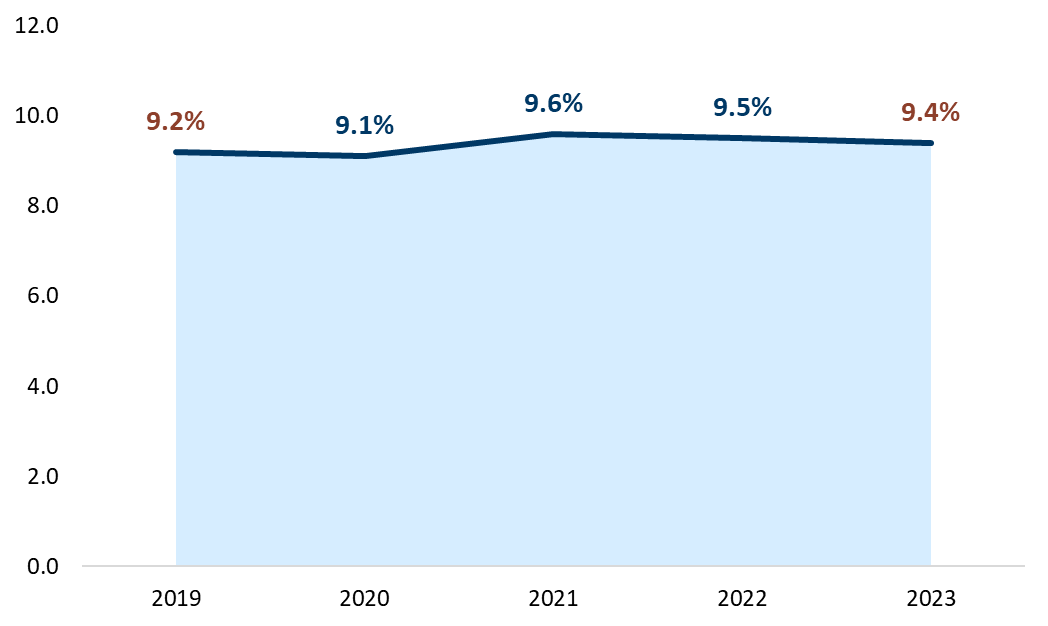
Source: Minnesota resident final birth file, 2019-2023
Download: The percent of Minnesota babies born preterm by year, from 2019 to 2023 (CSV).
- Minnesota: In 2023, 9.4% of babies were born preterm. This is about nine out of 100 babies.
- United States: In 2023, 10.4% of babies were born preterm. This is about 10 out of 100 babies.
By race/ethnicity and foreign-born
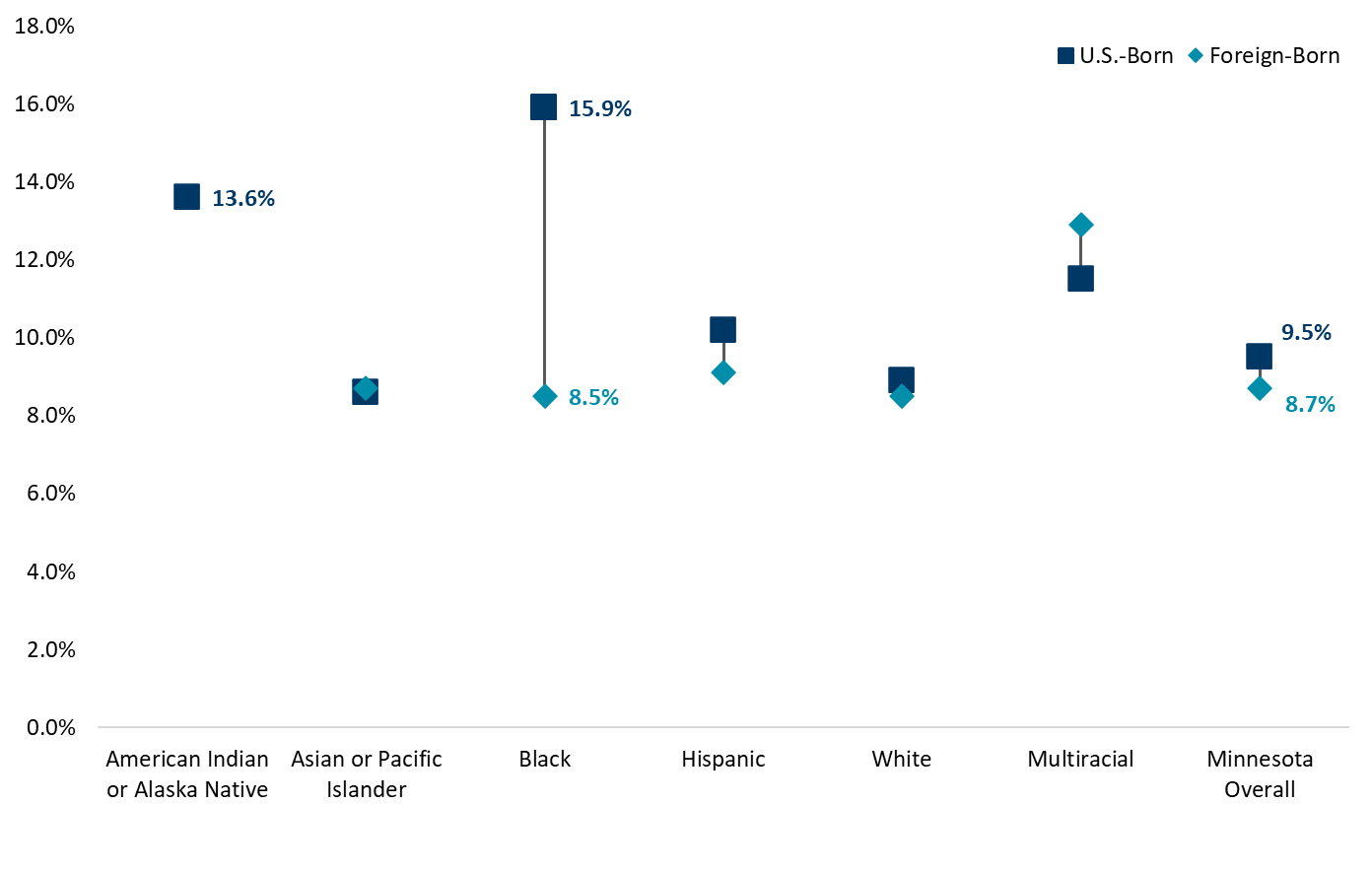
Some Minnesotans are more likely to have a baby born preterm. Overall, American Indian or Alaska Native mothers/birthing parents had the highest percent of babies born preterm. However, when factoring in where a mother/birthing parent was born, Black mothers/birthing parents born in the United States had the highest percent of babies born preterm. The percent of babies born preterm to U.S.-born Black mothers/birthing parents was almost two times higher than for Black mothers/birthing parents born outside of the U.S. (those who were foreign-born).
United States-born Black and American Indian/Alaska Native mothers/birthing parents experience the highest percentages of preterm babies in Minnesota, 2019 - 2023.
Source: Minnesota resident final birth file, 2019-2023
Minnesota mothers/birthing parents born in the United States had a higher percentage of babies born preterm compared to foreign-born mothers. From 2019 to 2023:
- 15.9% of babies born to U.S.-born Black mothers/birthing parents were preterm. That is about 16 out of 100 babies.
- 13.6% of babies born to U.S.-born American Indian or Alaska Native mothers/birthing parents were preterm. That is about 14 out of 100 babies.
Time between pregnancies
A short amount of time between pregnancies also makes having a preterm birth more likely. Over 21% of mothers/birthing parents who had fewer than 12 months between pregnancies had a baby born preterm. That is two times higher than mothers/birthing parents who had more than 12 months between their pregnancies.
Mothers/birthing parents who had fewer than 12 months between pregnancies were two times more likely to have a baby born preterm, 2019 - 2023.
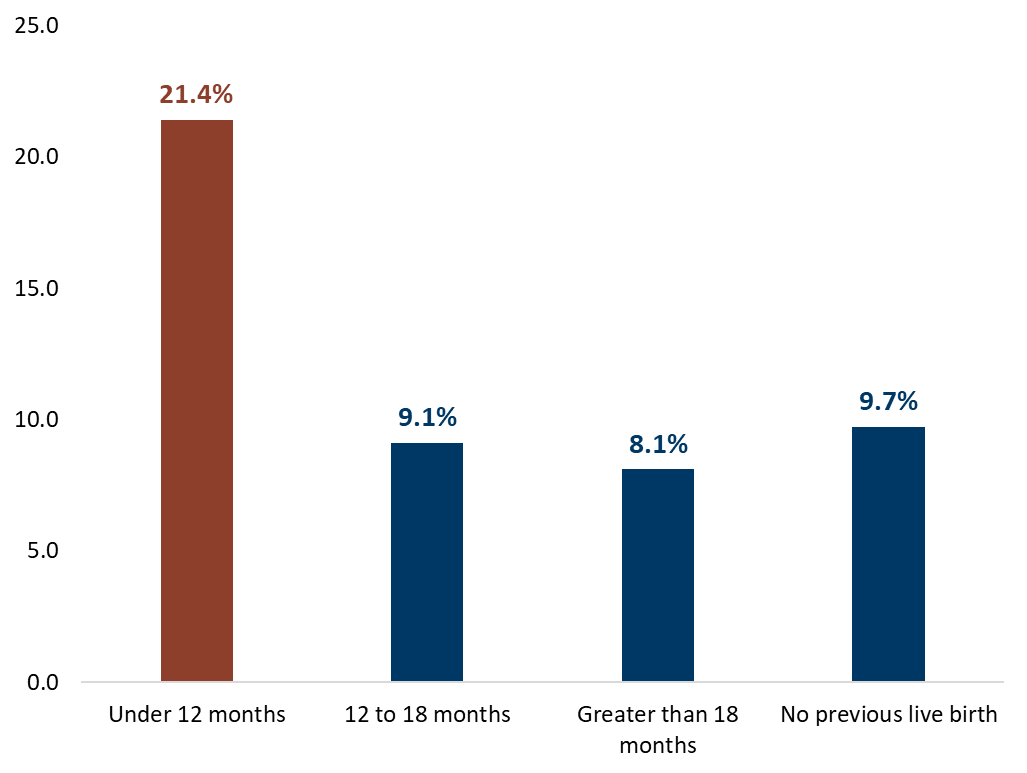
Source: Minnesota resident final birth file, 2019-2023
Download: The percent of Minnesota babies born preterm by months between pregnancies, 2019-2023 (CSV).
Resources
See more by going to the interactive data.
March of Dimes (2024, February). Preterm babies. Retrieved January 7, 2026, from Preterm babies | March of Dimes.
March of Dimes (2024, February). Preterm labor and preterm birth: Are you at risk? Retrieved January 7, 2026, from Preterm labor and preterm birth: Are you at risk? | March of Dimes.
Martin JA, Hamilton BE, Osterman MJK. Births in the United States, 2023. NCHS Data Brief, no 507. Hyattsville, MD: National Center for Health Statistics. 2024. DOI: CDC: Births in the United States, 2023 (PDF).