
Secondary menu

  • About Us
  • News & Stories
  • Translated Materials
Minnesota Department of Health logo
  • Data, Statistics, and Legislation

    Data, Statistics, and Legislation

    Statistical reports, health economics, policy, and legislation.
    Data, Statistics, and Legislation
    • Community Health
    • Diseases and Conditions
    • Environmental Health
    • Health Behaviors and Risk Factors
    • Health Care Cost and Quality
    • Reporting and Exchanging Data
    • Legislation and Policy
  • Diseases and Conditions

    Diseases and Conditions

    A-Z disease listing, diseases and conditions by type.
    Diseases and Conditions
  • Health Care Facilities, Providers, and Insurance

    Health Care Facilities and Providers

    Directories of facilities, professional certifications, health insurance and patient safety.
    Health Care Facilities and Providers
    • Facility Certification, Regulation and Licensing
    • Insurance
    • Health Information Technology
    • Provider Certifications, Licenses, Registrations and Rosters
    • Patient Health and Safety
    • Health Care Homes
    • Notices Related to Health Records
    • Rural Health and Primary Care
    • Trauma System
  • Healthy Communities, Environments, and Workplaces

    Healthy Communities, Environments, and Workplaces

    Indoor air and drinking water quality, community prevention and emergency preparedness.
    Healthy Communities, Environments, and Workplaces
    • Community Wellness and Health Equity
    • Healthy Schools and Child Care
    • Healthy Businesses and Workplaces
    • Local Public Health
    • Environments and Your Health
    • Safety and Prevention
    • Emergency Preparedness and Response
    • Equitable Health Care Task Force
    • Transforming the Public Health System in Minnesota
  • Individual and Family Health

    Individual and Family Health

    Birth records, immunizations, nutrition and physical activity.
    Individual and Family Health
    • Vital Records and Certificates
    • Disabilities and Special Health Needs
    • Disease Prevention and Symptom Management
    • Healthy Aging
    • Healthy Children, Youth and Adolescents
    • Mental Health and Well-being
    • Reproductive Rights and Protections in Minnesota
    • Women and Infants
MDH Logo

Breadcrumb

  1. Home
  2. Healthy Communities, Environment and Workplaces
  3. Center For Public Health Practice
  4. Tools and Training From The Center For Public Health Practice
  5. Health Equity Resource Library
Topic Menu

Center for Public Health Practice

  • Home: Center for Public Health Practice
  • Assistance & Workforce Development
  • Assessment & Planning
  • Connect
  • Funding Opportunities
  • Healthy Minnesota Partnership
  • Local Public Health Act
  • SCHSAC
  • Tools & Training
  • Contact Us

Related Sites

  • Minnesota Partners in Public Health Conference
  • Transforming Minnesota's Public Health System

Center for Public Health Practice

  • Home: Center for Public Health Practice
  • Assistance & Workforce Development
  • Assessment & Planning
  • Connect
  • Funding Opportunities
  • Healthy Minnesota Partnership
  • Local Public Health Act
  • SCHSAC
  • Tools & Training
  • Contact Us

Related Sites

  • Minnesota Partners in Public Health Conference
  • Transforming Minnesota's Public Health System
Contact Info
Center for Public Health Practice
651-201-3880
health.ophp@state.mn.us

Contact Info

Center for Public Health Practice
651-201-3880
health.ophp@state.mn.us

Public Health Resource Library 
Moving Into Equity: The Public Health Journey

Public Health National Center for Innovations (PHNCI)

Moving into equity: The public health journey describes stages of organizational development related to health equity practice for public health departments. It provides practical tips, suggestions for overcoming challenges, and tools to use along the way.

This guide maps out the characteristics of an equity-focused health department at different stages of development. It offers concrete actions suggested by practitioners in the field to help people move their health departments from one stage to the next. It is a practice-focused guide that provides:

  • "Traveling tips" to help people in a health department get started advancing equity
  • A principles-based evaluation framework for assessing a health department's equity actions
  • Practical ideas for coping with and overcoming resistance and other challenges in health equity work
  • A list of recommended articles/commentaries, tools, and other resources that can help organizations as they advance their equity practice

The guide is the result of a series of structured conversations with public health leaders and community partners, convened by the Minnesota Department of Health, with support from PHNCI. The group included public health practitioners from urban and rural public health departments as well as community voices.

When to use

​While the guide was written for a public health audience, other organizations can adapt the content.

Other audiences for this guide: Individuals looking to champion health equity, health equity teams looking for ideas about how to move their health departments forward, community members working with a health department to advance equity.

More specifically, readers can:

  • Use the stages and their characteristics to consider where their department is on equity, and where they want to be
  • Use what the guide calls "transitional actions" to identify concrete steps to take to move from one stage to the next, like hold an informal meeting to find out who is ready for equity work; or start collecting program/service data by race, gender, sexual orientation, disability, income, and geography
  • Review the "traveling tips" (pp. 5-6), which can be helpful for those at the early stages in their journey into equity
  • Consider the lists of internal and external driving forces (pp. 12-13) to look for ideas about specific things that can support equity work in the organization
  • Look for ways to prepare for some of the challenges of equity work or for ideas to address resistance in the "bumps in the road" section (pp. 14-18)
  • Check the "tools and resources" section (pp. 21-26) for resources that can support transitional actions between each stage, and how to use them

Things to consider

The authors note some limitations of the document on p. 2. These include: 1) a short time frame for development, which did not allow sufficient time to vet the ideas with a broader set of partners; 2) the content is not, and was not intended to be, research-based; and 3) the ideas and language reflect current knowledge and wisdom at a single point in time, and equity in health is a developing area of practice for public health that will continue to grow and evolve.

Use this resource
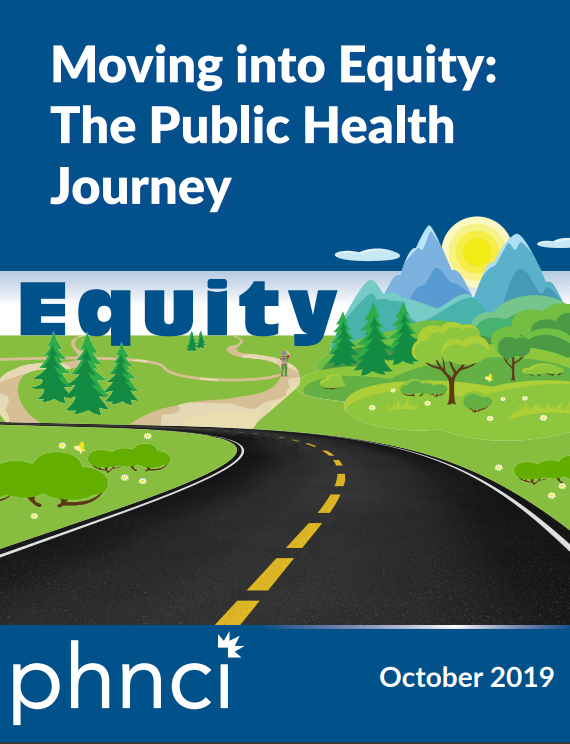
Cover of the report: Moving into Equity

Find similar resources

  • By practice: equip staff
  • By type: guides/toolkits
Tags
  • public health practice
Last Updated: 07/22/2025
  • Facebook
  • X
  • Instagram
  • LinkedIn
  • Youtube

About MDH

  • About Us
  • Grants and Loans
  • Advisory Committees

Legal & Accessibility

  • Privacy Policy
  • Equal Opportunity
  • Feedback Form

Careers at MDH

This is an official website of the State of Minnesota. Visit Minnesota.gov for more information.