
Secondary menu

  • About Us
  • News & Stories
  • Translated Materials
Minnesota Department of Health logo
  • Data, Statistics, and Legislation

    Data, Statistics, and Legislation

    Statistical reports, health economics, policy, and legislation.
    Data, Statistics, and Legislation
    • Community Health
    • Diseases and Conditions
    • Environmental Health
    • Health Behaviors and Risk Factors
    • Health Care Cost and Quality
    • Reporting and Exchanging Data
    • Legislation and Policy
  • Diseases and Conditions

    Diseases and Conditions

    A-Z disease listing, diseases and conditions by type.
    Diseases and Conditions
  • Health Care Facilities, Providers, and Insurance

    Health Care Facilities and Providers

    Directories of facilities, professional certifications, health insurance and patient safety.
    Health Care Facilities and Providers
    • Facility Certification, Regulation and Licensing
    • Insurance
    • Health Information Technology
    • Provider Certifications, Licenses, Registrations and Rosters
    • Patient Health and Safety
    • Health Care Homes
    • Notices Related to Health Records
    • Rural Health and Primary Care
    • Trauma System
  • Healthy Communities, Environments, and Workplaces

    Healthy Communities, Environments, and Workplaces

    Indoor air and drinking water quality, community prevention and emergency preparedness.
    Healthy Communities, Environments, and Workplaces
    • Community Wellness and Health Equity
    • Healthy Schools and Child Care
    • Healthy Businesses and Workplaces
    • Local Public Health
    • Environments and Your Health
    • Safety and Prevention
    • Emergency Preparedness and Response
    • Equitable Health Care Task Force
    • Transforming the Public Health System in Minnesota
  • Individual and Family Health

    Individual and Family Health

    Birth records, immunizations, nutrition and physical activity.
    Individual and Family Health
    • Vital Records and Certificates
    • Disabilities and Special Health Needs
    • Disease Prevention and Symptom Management
    • Healthy Aging
    • Healthy Children, Youth and Adolescents
    • Mental Health and Well-being
    • Reproductive Rights and Protections in Minnesota
    • Women and Infants
MDH Logo

Breadcrumb

  1. Home
  2. Healthy Communities, Environment and Workplaces
  3. Physical Activity
Topic Menu

Physical Activity

  • Physical Activity Home
  • Basics
  • Active Schools Minnesota
  • Active Recess Videos
  • Active Transportation
  • Safe Routes to School
  • Walk and Bike Friendly Communities
  • Walkable Community Workshops
  • Resources

Related Sites

  • Managing Chronic Conditions during COVID-19
  • SHIP
  • TV, Screen Time and Health

Physical Activity

  • Physical Activity Home
  • Basics
  • Active Schools Minnesota
  • Active Recess Videos
  • Active Transportation
  • Safe Routes to School
  • Walk and Bike Friendly Communities
  • Walkable Community Workshops
  • Resources

Related Sites

  • Managing Chronic Conditions during COVID-19
  • SHIP
  • TV, Screen Time and Health
Contact Info
Office of Statewide Health Improvement Initiatives
health.activeliving@state.mn.us

Contact Info

Office of Statewide Health Improvement Initiatives
health.activeliving@state.mn.us

Active Transportation

Communities Help Shape Our Health
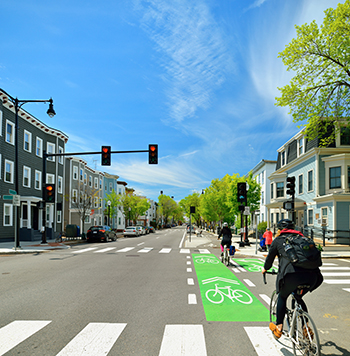
bikers on streetActive transportation integrates physical activity into daily routines such as walking or biking to destinations such as work, school or a transit stop.

How our communities are planned, designed and built can have an influence on how healthy we are. People tend to be more active where they have pleasant and safe places to do so. Sidewalks, crosswalks, bike paths and lanes, as well as trees, lighting, benches, water fountains and trash removal can make a big difference.

What communities can do

Minnesota communities are working with the Statewide Health Improvement Partnership to promote active transportation to provide safe and convenient opportunities for physical activity.

Active transportation can be encouraged through:

  • Sidewalks, walking paths and bike facilities
  • Safe and convenient pedestrian street crossing features such as crosswalks, stop signs, stop lights and other street crossing elements
  • Motorist traffic calming and speed-reduction measures
  • Street landscaping and pedestrian-level street lighting
  • Bike racks, lockers, or other bike parking and storage facilities
  • Land use development patterns to locate homes, worksites, schools, stores and other community services and amenities within reasonable walking distances (pedestrian-oriented development) and within easy access to transit (transit-oriented development)
  • Signage that helps pedestrians and bicyclists navigate to their destinations.

NOTE: OSHII staff have examples of pedestrian and bike plans, transportation plans, parks and trails plans, comprehensive plans and more. For more information, please contact health.activeliving@state.mn.us.

Learn More

By collaborating with the Statewide Health Improvement Partnership, cities and counties across Minnesota are working on creating master walk and bike plans; updating municipal plans to include Complete Streets with sidewalks and crosswalks; increasing access to connected walking and bicycling networks; connecting and promoting trail systems; and collaborating on projects that improve walkability and bikeability in communities. Learn more about SHIP.

Tags
  • physical activity
Last Updated: 09/06/2024
  • Facebook
  • X
  • Instagram
  • LinkedIn
  • Youtube

About MDH

  • About Us
  • Grants and Loans
  • Advisory Committees

Legal & Accessibility

  • Privacy Policy
  • Equal Opportunity
  • Feedback Form

Careers at MDH

This is an official website of the State of Minnesota. Visit Minnesota.gov for more information.