
Increasing Screening for Diabetes Complications
in Federally Qualified Health Centers
MDH and partners created a coding tool so clinics can collect diabetes data from electronic health records. The improved data collection will help increase screening rates of patients with diabetes for chronic kidney disease, and eventually, diabetic retinopathy.
Complications from diabetes often go undiagnosed
Chronic kidney disease (CKD) and diabetic retinopathy (DR) are two of the most serious and costly complications of uncontrolled diabetes. In fact, diabetic retinopathy is the leading cause of vision loss in people ages 18-64. And although a routine eye exam can help detect changes early when the condition is treatable, only 58% of people with diabetes are getting screened nationwide. Minnesota screening rates for diabetic retinopathy are higher at 72%.
An estimated 642,000 adults in Minnesota (about one in seven) have chronic kidney disease. However, about 90% are unaware of it because early CKD often has no symptoms. Consistent screening for the disease is imperative.
According to best practice guidelines, screening for CKD is done through two different tests: the estimated glomerular filtration rate (eGFR) and urine albumin-creatinine ratio (uACR). While eGFR is a standard part of a basic metabolic panel done with a basic blood test, the uACR test is a urine assessment, and it is collected less frequently. As a result, inadequate screening continues to limit timely diagnosis and treatment.

Most people with diabetes who have CKD remain undiagnosed: national data suggests that only about 28% of people with diabetes are adequately screened for chronic kidney disease. Of those that get screened, 37% are diagnosed with chronic kidney disease. Medicaid recipients and individuals who are Black, African American; Hispanic or Latino; and American Indian, especially those with diabetes, are even more likely to develop chronic kidney disease.
Innovative solutions for data collection
The Minnesota Department of Health (MDH), with funding from CDC, partnered with the National Kidney Foundation (NKF) to develop strategies to increase screening for diabetes complications. NKF and MDH then partnered with Southside Community Health Services, a Federally Qualified Health Center (FQHC) in Minneapolis that is a member clinic of the Federal Qualified Health Center Unified Health Network (FUHN) system. Southside’s diverse patient clientele include Hispanic, African American, low income, and Medicaid recipients.
To begin, MDH, NKF, and Southside worked together to create a data analysis strategy to determine baseline rates of CKD and DR screening among Southside patients. The initial data extraction was done through Quest Lab, the external lab system used by Southside. The results of Quest data provided useful information about both uACR and eGFR screening rates. However, the Quest data only captured a limited number of patients who had tests sent to the lab. This approach did not yield robust enough data to implement any quality improvement strategies for the entire clinic.
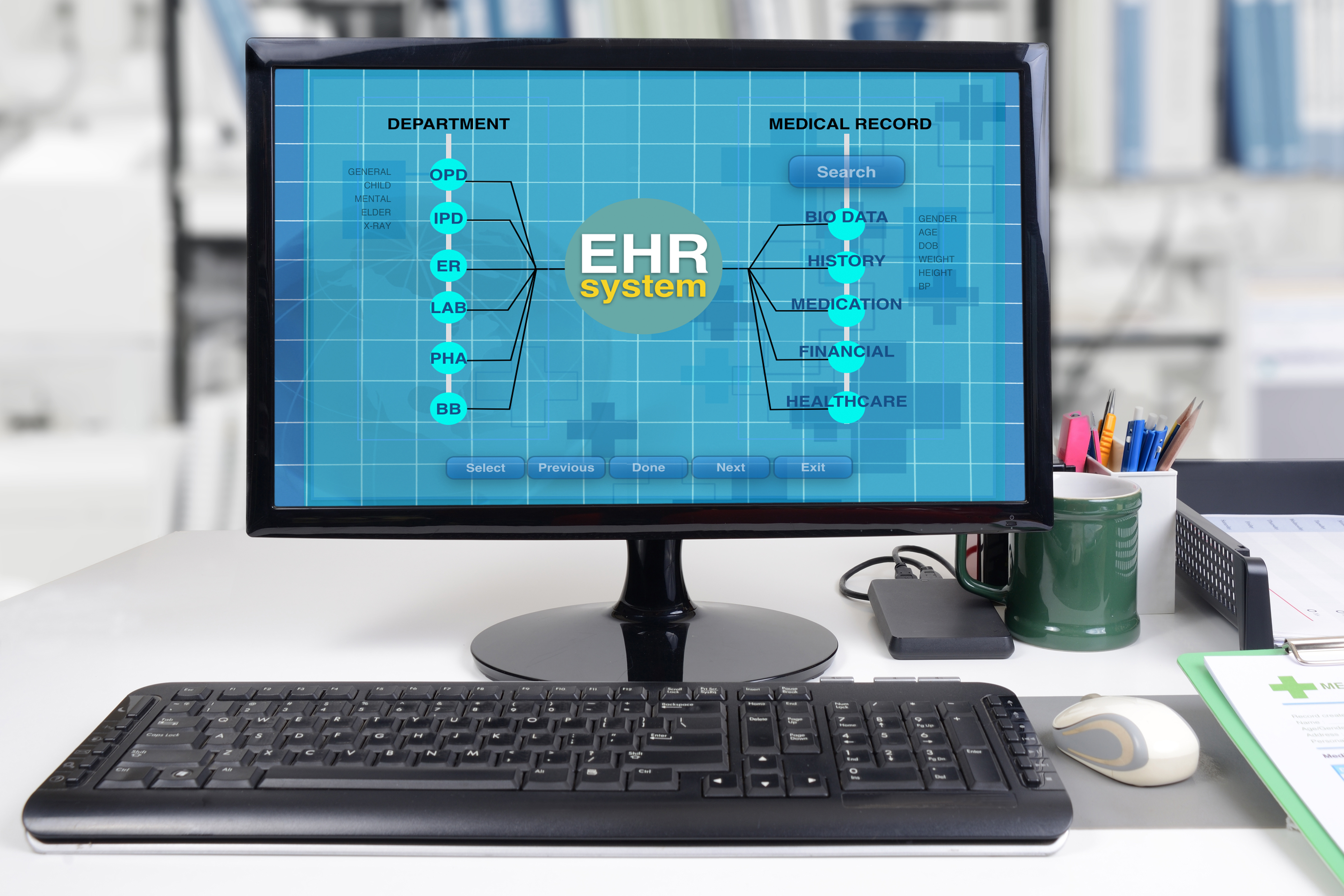
The team pivoted to using Southside’s electronic health record, OCHIN Epic, to retrieve the needed data. However, staff capacity and resources proved to be an issue. Realizing other FQHCs may have the same barriers, the team decided a different tactic would better leverage groups with data analysis capacity and share costs and benefits across more clinics.
Southside is a part of the OCHIN Network, a group of around 300 rural and community care organizations that share an Epic EHR and a shared pool of health IT resources among others. The team proposed building a tool for OCHIN to support clinics using OCHIN Epic, including Southside, to obtain data on CKD and retinopathy screening. The OCHIN Epic team was interested and the team obtained funding for the work from MDH, the Association of Diabetes Care and Education Specialist (ADCES), and NKF.
Helping more clinics utilize technology to screen more patients
-Alyssa Palmer, Director of Primary Care Integration at Southside Community Health Services
Recognizing the time, staff, and financial barriers needed to gather clinic-level data, NKF, MDH, and Southside pooled their resources to develop a Diabetes Complication Screening Toolkit that can be used by other FQHCs using OCHIN Epic. The Toolkit provides the standardized coding needed to collect baseline screening rates that will guide development of quality improvement strategies and to track progress at a clinic level using data-driven decision-making.
The Toolkit also included patient education materials and resources that highlight best practices for diagnosis, treatment, and management of CKD. By using the Toolkit, Southside Community Health Services has begun to develop quality improvement strategies including the addition of CKD screening to the list of preferred lab tests for high-risk populations and inclusion of CKD screening best practices to the Onboarding Orientation for new providers.
“When paired with the Toolkit, it empowers us to turn insights into care that truly meets the needs of our patients at risk for chronic kidney disease.” said Alyssa Palmer, Director of Primary Care Integration at Southside Community Health Services. "What makes this especially impactful is the ripple effect. These resources now have the potential to elevate care across clinics and communities beyond Southside.”
More clinics will now be able to get better data, identify evidence-based strategies to increase CKD screening rates, and monitor the effectiveness of implemented interventions over time.
Initially, the Toolkit will be shared with the eight other FUHN clinics using OCHIN Epic. MDH and NKF will provide support for additional Minnesota FQHCs interested in adopting the Toolkit, and NKF and ADCES will promote the Toolkit for national recognition and adoption. Potential reach for OCHIN Epic users includes 170 health systems with 1600 clinic sites across 33 states serving over six million patients.