
Secondary menu

  • About Us
  • News & Stories
  • Translated Materials
Minnesota Department of Health logo
  • Data, Statistics, and Legislation

    Data, Statistics, and Legislation

    Statistical reports, health economics, policy, and legislation.
    Data, Statistics, and Legislation
    • Community Health
    • Diseases and Conditions
    • Environmental Health
    • Health Behaviors and Risk Factors
    • Health Care Cost and Quality
    • Reporting and Exchanging Data
    • Legislation and Policy
  • Diseases and Conditions

    Diseases and Conditions

    A-Z disease listing, diseases and conditions by type.
    Diseases and Conditions
  • Health Care Facilities, Providers, and Insurance

    Health Care Facilities and Providers

    Directories of facilities, professional certifications, health insurance and patient safety.
    Health Care Facilities and Providers
    • Facility Certification, Regulation and Licensing
    • Insurance
    • Health Information Technology
    • Provider Certifications, Licenses, Registrations and Rosters
    • Patient Health and Safety
    • Health Care Homes
    • Notices Related to Health Records
    • Rural Health and Primary Care
    • Trauma System
  • Healthy Communities, Environments, and Workplaces

    Healthy Communities, Environments, and Workplaces

    Indoor air and drinking water quality, community prevention and emergency preparedness.
    Healthy Communities, Environments, and Workplaces
    • Community Wellness and Health Equity
    • Healthy Schools and Child Care
    • Healthy Businesses and Workplaces
    • Local Public Health
    • Environments and Your Health
    • Safety and Prevention
    • Emergency Preparedness and Response
    • Equitable Health Care Task Force
    • Transforming the Public Health System in Minnesota
  • Individual and Family Health

    Individual and Family Health

    Birth records, immunizations, nutrition and physical activity.
    Individual and Family Health
    • Vital Records and Certificates
    • Disabilities and Special Health Needs
    • Disease Prevention and Symptom Management
    • Healthy Aging
    • Healthy Children, Youth and Adolescents
    • Mental Health and Well-being
    • Reproductive Rights and Protections in Minnesota
    • Women and Infants
MDH Logo

Breadcrumb

  1. Home
  2. Healthy Communities, Environment and Workplaces
  3. Environments and Your Health
  4. Hazardous Sites and Substances
Topic Menu

Hazardous Sites & Substances

  • Hazardous Sites and Substances Home
  • Hazardous Waste Sites
  • Topics
  • Choose Safe Places Minnesota
  • Environmental Exposures Grand Rounds
  • Exposure and Health Investigations
  • Contact us

Related Topics

  • Water Contaminants and Your Health
  • Cancer and the Environment
  • Fish Consumption Guidance
  • Children's Environmental Health
  • Air Quality by Topic
  • MN Public Health Data Access Portal

Environmental Health Division

  • EH Division Home

Hazardous Sites & Substances

  • Hazardous Sites and Substances Home
  • Hazardous Waste Sites
  • Topics
  • Choose Safe Places Minnesota
  • Environmental Exposures Grand Rounds
  • Exposure and Health Investigations
  • Contact us

Related Topics

  • Water Contaminants and Your Health
  • Cancer and the Environment
  • Fish Consumption Guidance
  • Children's Environmental Health
  • Air Quality by Topic
  • MN Public Health Data Access Portal

Environmental Health Division

  • EH Division Home
Contact Info
Site Assessment and Consultation Unit (SAC)
651-201-4897
800-657-3908 (toll-free)
health.hazard@state.mn.us

Contact Info

Site Assessment and Consultation Unit (SAC)
651-201-4897
800-657-3908 (toll-free)
health.hazard@state.mn.us

Well Water Testing 
Choose Safe Places Minnesota

Most private well water in Minnesota is safe, but some well water may have contaminants in it that can make children and babies sick or harm their development. The only way to know if your well water is safe for the children in your care is to have it tested.

Children drink more water for their size than adults, which means they have a greater risk of being exposed to water contaminants. Babies' and younger children's brains and organs can be more easily injured or damaged because they are still developing.

Only you can make sure the children in your care are safe.
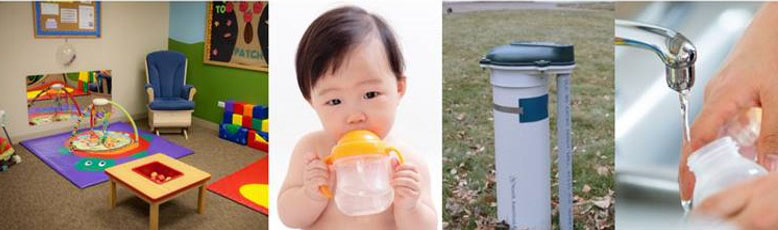
Picture of a childcare center, a baby drinking from a bottle, a water treatment device in a yard, and a running faucet with a water testing bottle below it.

Information for child care programs that operate in homes with private wells

You are required to test your private well every year for:

  • Coliform bacteria
  • Nitrate

MDH also recommends testing your private well at least once for:

  • Lead
  • Manganese
  • Arsenic

The video below provides information about private well testing.

Information for child care centers using well water as their drinking water source

You should already be in contact with MDH Drinking Water Protection and have an Annual Monitoring Calendar. Contact MDH if you have questions.

Resources

  • Water Quality/Well Testing/Well Disinfection
  • Safe Drinking Water For Your Baby

If you have questions at any point, please contact us.

DISCLAIMER: Any cost associated with recommended testing or water treatment is the responsibility of the child care program operator/home owner.
The ATSDR Choose Safe Places logo

Tags
  • environment
Last Updated: 10/14/2024
  • Facebook
  • X
  • Instagram
  • LinkedIn
  • Youtube

About MDH

  • About Us
  • Grants and Loans
  • Advisory Committees

Legal & Accessibility

  • Privacy Policy
  • Equal Opportunity
  • Feedback Form

Careers at MDH

This is an official website of the State of Minnesota. Visit Minnesota.gov for more information.