
Fish Consumption
- Fish Consumption Home
- Waterbody-specific, Northeast, and Statewide Guidelines
- Contaminants and Minnesota Fish
- Order Fish Consumption Materials
- Eating Fish: Benefits and Serving Size
- Resources, Reports & Technical Information
- Great Lakes Consortium
- Information in Other Languages
Related Topics
Environmental Health Division
Contact Info
Fish Consumption Guidance Updates for Some Waterbodies in 10 Minnesota Counties
Updated April 2025
MDH is updating fish consumption guidelines due to per-and polyfluoroalkyl substances (PFAS) found in fish from some waterbodies in the Twin Cities metro area as well as in Douglas, Martin, McLeod, and St. Louis counties and Lake Superior. The updated guidelines primarily focus on PFAS data but are also protective for mercury and polychlorinated biphenyls (PCBs).
Lake Superior Update: With the updated review of PFAS data, MDH has determined that rainbow smelt in Lake Superior can be eaten more frequently up to one serving per week from one serving per month.
- Hmong: Cov Lus Taw Qhia Kho Tshiab Rau Kev Noj Ntses hauv qee lub pas dej ntawm 10 lub county hauv Minnesota (PDF)
- Spanish: Actualización de la Guía para el Consumo de Pescado para las masas de agua de 10 condados de Minnesota (PDF)
Map: Fish consumption guidance updates in some impacted waterbodies by county (April 2025)
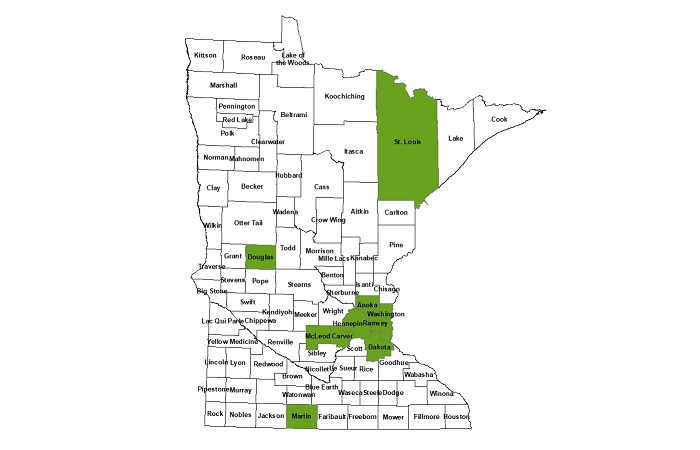
Table: Fish consumption guidance updates in some impacted waterbodies by county (PDF)
It may take years of regularly eating fish to accumulate levels of PFAS in your body before it becomes a health concern. MDH has used fish contaminant data and updated methods to better inform fish consumers about where PFAS fish contamination is and how you can lower your exposures. For certain waterbodies, MDH recommends some fish should be eaten in limited amounts or not be consumed at all.
If you plan to fish at a lake in one of these counties, and if you plan to eat the fish you catch, check LakeFinder on the Department of Natural Resources (DNR) website to see if there is a fish consumption guideline in effect for that lake. Lakefinder includes fish consumption guidance for all Minnesota lakes.
If you plan to eat fish from a river in one of these counties, review the updated list of Waterbody-Specific Guidelines for rivers at the Fish Consumption Guidance website.
MDH’s fish consumption guidance is intended to provide Minnesotans with the information they need to make informed choices for the health and safety of their family.
Fish consumption guidance depends on:
- Where you caught the fish. Some waterbodies have Waterbody-Specific Guidelines due to elevated levels of PFAS, mercury, or PCBs.
- Who you are. Some people are more sensitive than others to negative health effects from exposure to PFAS. PFAS, including PFOS, build-up in people over time, with high exposure and potential for health effects to developing humans. This means that pregnancy, infancy, and childhood all represent specific life stages of concern for PFAS exposures. The most sensitive groups include people who are or could become pregnant, those who are breastfeeding or plan to breastfeed, and children under age 15.
- The species of fish. The maximum number of servings recommended per week or month may vary among fish species caught in the same waterbody.
The updated guidelines focus attention on waterbodies in Minnesota with the highest levels of PFAS in fish. Categories for Fish Consumption Guidelines (PDF) now use lower (more stringent) thresholds for one type of PFAS, perfluorooctane sulfonate (PFOS), for sensitive populations; address PFAS contamination across fish species, while making the guidelines easier to follow; and account for mixtures of PFAS.
Eating fish is just one way people are exposed to PFAS. PFAS are present in many consumer products, environments, workplaces, and homes. Minnesota has been taking action to eliminate PFAS for many years. As we learn more about PFAS in fish, MDH will update fish consumption guidance as needed.
More information on reducing exposures to PFAS can be found here:
April 24th fish consumption guidance webinar
The Fish Consumption Guidance program held a webinar for communities impacted by the updated guidance on Thursday, April 24th, 2025. The slides from this presentation are now available at Fish Consumption Guidance Summary (PDF). If you have questions about the guidance updates, please contact us at HEALTH.fish@state.mn.us.