
2026 Public Health Laboratory Newsroom
Testing Wastewater from Across Minnesota for COVID-19, Flu, RSV
During the COVID-19 pandemic, public health workers did the vital work of tracking the disease’s spread and how it changed. After people were tested at hospitals, clinics, schools, or other venues, the Minnesota Public Health Laboratory would receive samples to analyze. The lab then produced data about what viruses were detected where.
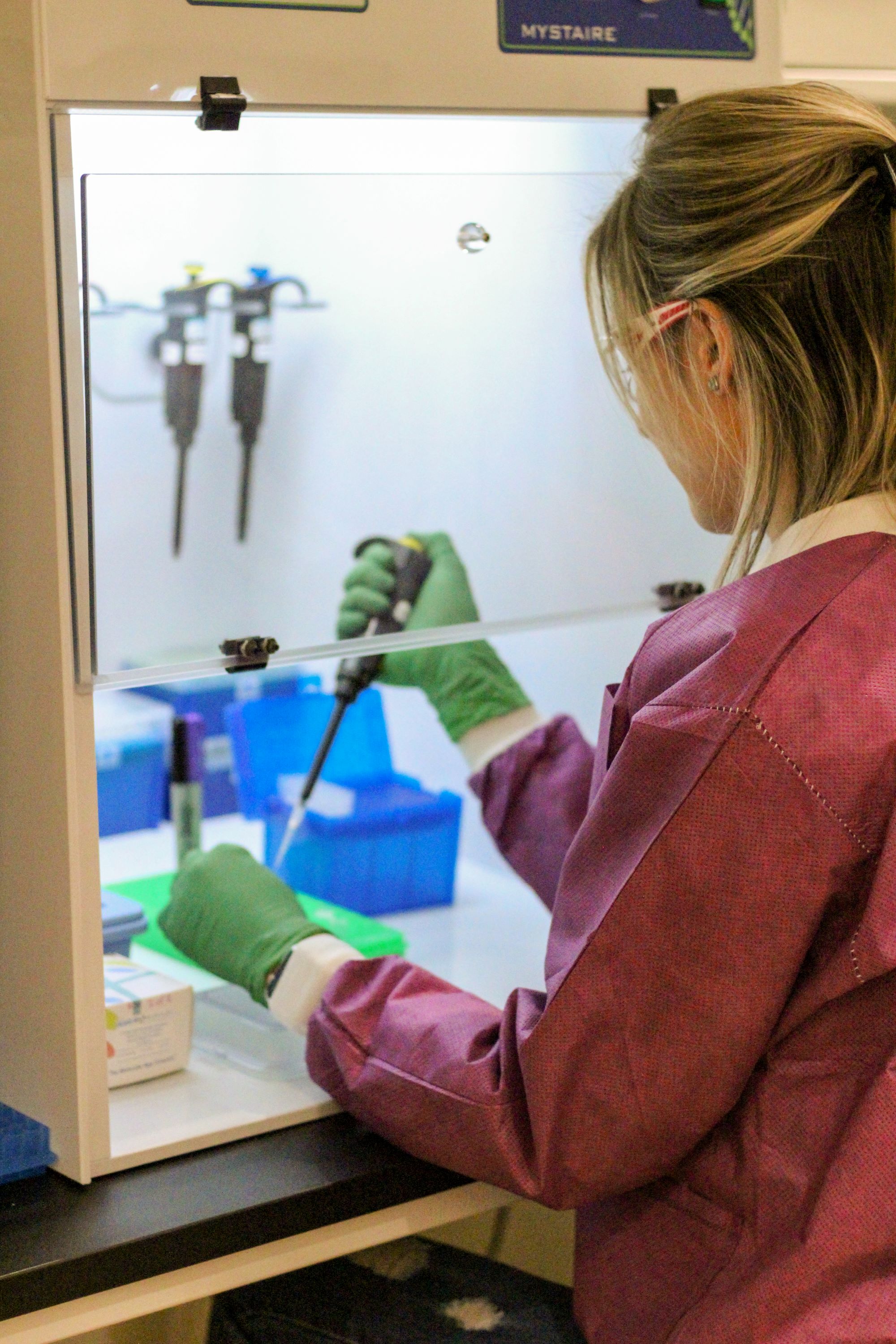 Wastewater monitoring became a supplementary system for tracking the spread of COVID-19. In September 2020, the Centers for Disease Control and Prevention (CDC), The University of Minnesota, the Minnesota Department of Health, and other state institutions established a system called the National Wastewater Surveillance System (NWSS). University of Minnesota labs began testing samples taken from sewage systems for signs of COVID-19 and other respiratory diseases.
Wastewater monitoring allows public health institutions to discover signs of disease in an area before its people get sick and go to hospitals. This gives the entire health infrastructure more time to mount a response. It also provides more information that can be used to update vaccines. (Read more at Wastewater Testing Helps Fight COVID-19, Other Infectious Disease.)
Post-Pandemic Wastewater Monitoring
In the later stages of the COVID-19 pandemic, more people used home testing and fewer schools routinely tested students for the disease. Fewer clinical samples were being tested at clinics, hospitals, and public health laboratories. Wastewater monitoring became more critical for monitoring the spread of respiratory diseases.
In 2026, COVID-19 remains a consistent threat, though not at the level it was during the peak of the pandemic. Wastewater monitoring in Minnesota is now focused primarily on three respiratory diseases: COVID-19, influenza (both A and B), and respiratory syntactical virus (RSV).
At this writing, 29 sites in Minnesota send wastewater samples for the Minnesota Public Health Laboratory to analyze. A new map shows these locations and the results at each.
Until recently, the University of Minnesota and the Minnesota Public Health Laboratory shared the testing of wastewater samples for the aforementioned respiratory diseases. The Public Health Laboratory has assumed responsibility for this testing because it uses a cutting-edge method, called digital polymerase chain reaction (dPCR), that can detect lower concentrations of all of the relevant viruses simultaneously. The dPCR method is adept at sifting through the many chemicals that end up in wastewater, such as detergents, to find minute pieces of viral genetic material. Labs of the University of Minnesota remain involved in a research role and monitoring for other diseases.
Return to the 2026 Public Health Laboratory Newsroom.