
2026 Public Health Laboratory Newsroom
Ebola Testing Readiness in the Minnesota Public Health Laboratory
An outbreak of Ebola virus disease was confirmed in two African countries in May 2026. As of June 16, 2026, there are more than 800 confirmed cases in the Democratic Republic of the Congo and more than a dozen in Uganda. (Read more at the World Health Organization’s web site.)
 While there are still no confirmed Ebola cases in the United States, the American healthcare system is ramping up preparedness efforts. The Minnesota Public Health Laboratory’s role is to accept samples from patients who meet specific criteria and quickly analyze whether the samples contain the Ebola virus. The lab is monitoring the current outbreak, verifying that its testing protocols are sufficient, and increasing its stock of supplies.
Ready to Test Samples for Ebola
The Emergency Preparedness and Response unit of the Minnesota Public Health Laboratory stands ready to conduct Ebola virus testing. It uses a test called the Global Fever Special Pathogens Panel that not only discovers whether Ebola is present in a sample; it also simultaneously checks the specimen for signs of more common diseases, such as malaria and dengue.
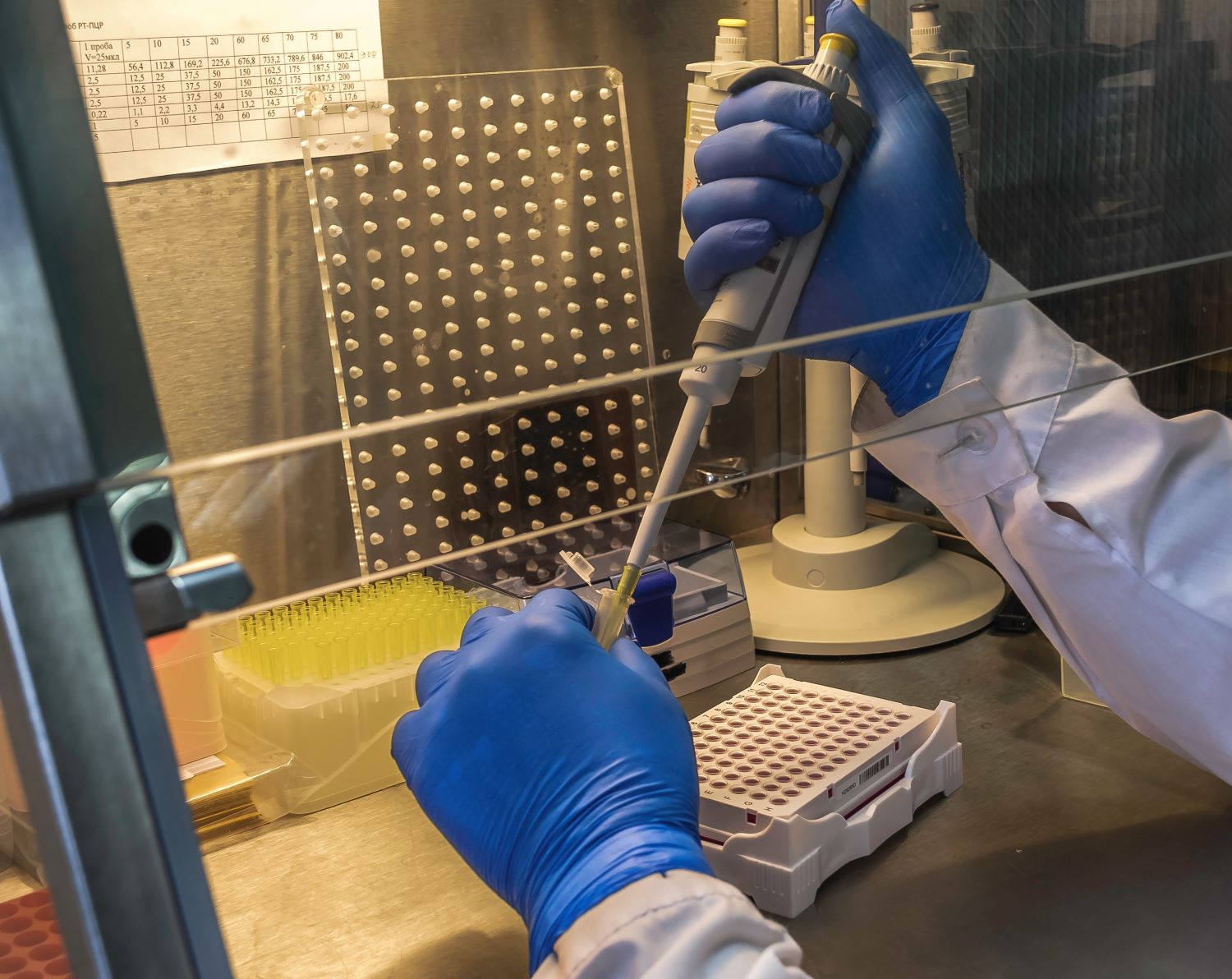 Specially trained Minnesota Infectious Disease Laboratory staff are on call 24 hours a day, 365 days a year to receive and test samples for Ebola. Testing must occur in special high-security Biosafety Level 3 rooms that are designed to contain potentially lethal substances. Anyone conducting a test for Ebola must be continually observed by another staff member.
The Emergency Preparedness and Response unit is also busy reviewing protocols for the unlikely event that a sample meets the requirements for testing for Ebola. Testing is coordinated with the hospital or clinic and with experts in Ebola at the state and federal levels, and patients are managed in a special pathogen center at the University of Minnesota Medical Center or the Mayo Clinic. The University of Minnesota Medical Center’s special pathogen center serves a region that encompasses not only Minnesota but also Illinois, Indiana, Michigan, Ohio, and Wisconsin.
Past Ebola Outbreak
In 2022, another Ebola outbreak resulted in 74 cases in Uganda. American labs received a handful of samples to test for Ebola, but none tested positive. The Minnesota Public Health Laboratory did not handle any suspected cases.
While the Ebola virus is very dangerous if contracted, it does not spread easily in the United States. Unlike the virus causing COVID-19, it cannot be contracted through the air. It instead spreads through bodily fluids or by handling the bodies of infected people. (Read more at Ebola Virus Disease - MN Dept. of Health.) The rapid testing, quarantine, and treatment systems used in the United States health care system make Ebola very containable. The Minnesota Public Health Laboratory is a vital part of that infrastructure.
Return to the 2026 Public Health Laboratory Newsroom.